Your early morning nature walk may be affected by the start of daily activity. Weak planning is soon revealed when it is still dark, cold and the ground may be wet under foot. A short list of things to consider in relation to light, route, pace, equipment and return time is all that is required to make a successful walk.
Start with the return time, not the trailhead
Do not make sunrise your target for completing a walk. Set a time for returning to your vehicle, home, or other place that you need to be. Work backwards from that time to include time for approaching your start point, for stopping along the way, for wildlife viewing, and for a leisurely return.
It is also sensible to build in some slack in case things don't go quite as planned and take a little longer than expected. A muddy crossing, a closed gate, a lost glove, or a longer than expected stop to re-read a map are just a few examples. When planning a route that has to be completed before other commitments such as work, family or other hunting activities it is best to set a strict return time and work back from there.
Tell someone where you are going and when you expect to return. Include the access point, the general direction you will be traveling in, the time you expect to return with and any contact details so that they can reach you in case of an emergency. Change the arrangement of people to know where you are and when you expect to return if your plans change.
Read the route in pre-dawn conditions
Be aware that hunting areas and public areas are closed at times and need to be checked for current restrictions. All paths appear obvious in daylight but can become difficult in low light. Certain sections of route may disappear into open fields, dense vegetation or rough uneven ground. Pay particular attention to water crossings and consider the exits from a route.
Your first foray into early morning walking should be on relatively short routes and on terrain with which you are familiar enough to understand the time that your walking will take. Don't add in minor extras to what seems to be a straightforward route. Routes with a number of decisions as to which path to take can actually seem longer than a straightforward loop of some miles or so.
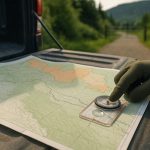
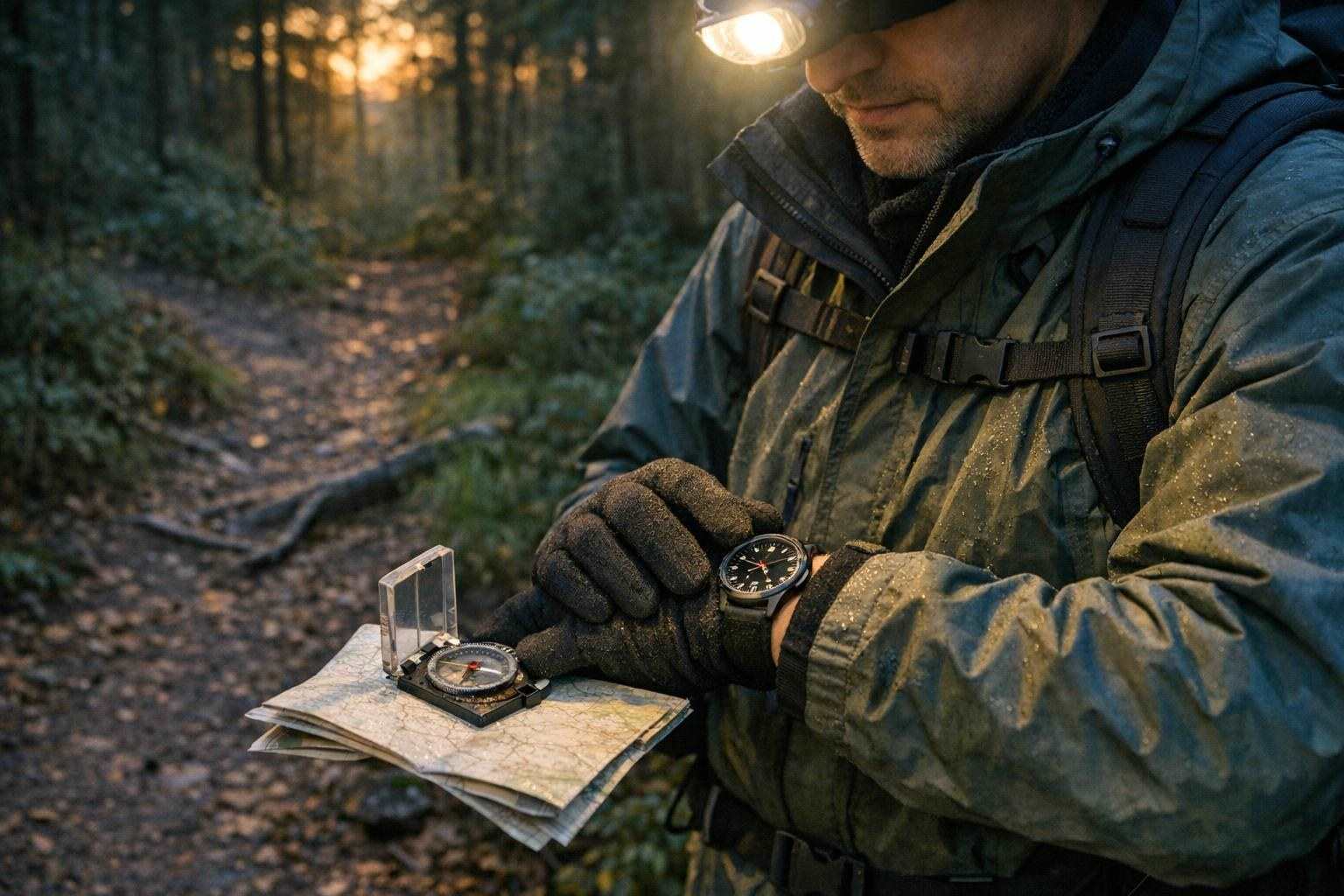
A map is far better than a phone for tracking routes. Ideally this should be a map that remains useful even if your phone does run out of battery. Mark on your map where you intend to turn round, not where you hope to get to.
Match equipment to light, ground, and weather
So for your footwear for an early morning nature walk you need shoes that can handle the route you are taking. The most imprudent paths of wet leaves, slippy frost, loose-gravel and slippery-roots are so easily underestimated when it is still dark.
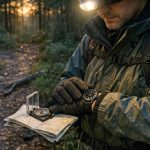
Headlamps or flashlights should be carried even when planning an early start for a dawn event. In addition to the light that will be used, it is a good idea to carry an extra in case it is required on the return. It is also sensible to test the main light before setting out to ensure that all controls are functioning as expected.
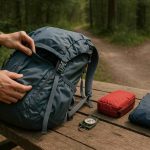
Dress in layers and take account of the fact you will be traveling slowly and may well come to a stop for wildlife observation. A hat and gloves may be needed in the first hour of the morning but will be cast off once you reach your hide. Other items to take are water, a wee snack, some basic first aid items, a power bank for your phone and items to protect you from the weather. As for what constitutes a 'light' load and how you will be able to carry it with both hands free, this should be obvious!
Make sure any gear, such as binoculars, cameras or other items that you need for your hunt, is safely tied or attached to your person so that it won't swing about whilst walking. Remember to prioritize your route and safety upon the outdoors, and ensure that you are complying with all current laws and regulations regarding items that you are planning to transport and also any items that you will be using whilst in the countryside.
Use sunrise as a timing checkpoint
The time of sunrise should be used as a checkpoint rather than as the time to arrive at a destination. The time before first light can be an excellent time to go out for quiet wildlife observation but it is also the worst time to be for navigation. The light will change throughout the day, possibly to cloud, fog or even tree cover and the walker must have a plan for each of these.
Go slowly. You cannot tell how uneven the ground is until you have already slipped on it. If you have to go down a track go slowly, and at junctions stop for a moment to see what the other route looks like and to hear the sound of cars, of water, of other walkers. Hear the sound of someone else using the place.
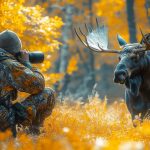
Observe wildlife from a safe distance, allow them to move through your path and do not follow animal tracks down into dense undergrowth even if this means missing all chance of viewing that animal. Your best view will likely be of their rear ends as they disappear into the distance. Personal safety and a predictable route are far more important than a poor view of an animal at a distance.
Make the walk low-impact and easy to end
Staying on the surface of trails such as paths, roads and woodland tracks rather than going 'off-piste' onto softer surfaces such as grass, heath or muddy paths helps to prevent erosion. Try to avoid widening muddy trails by taking circuits around soft spots. Ensure all food packaging and scraps are taken away with you and do not disturb any plants, antler sheds, nests etc. throughout your walk.
On shared paths, assume other people are walking towards you. Let them know you are coming by speaking calmly and brightly wearing clothing. Control your dog in line with the local rules or habitat and treat other walkers and naturists with due respect on shared terrain.
Return at your designated time. Leave behind wonderful views, further exploration of excellent sign, and beautiful weather. Plan your morning nature walk well in advance in order to account for time to return to your point of origin to report your return. A great sunrise hike is one that can be left at a moment's notice.
Writing down where you went, when you encountered hiccups, what extra clothing wasn't needed, and whether your pre-planned turn-around worked well can make your subsequent morning nature walk even better.